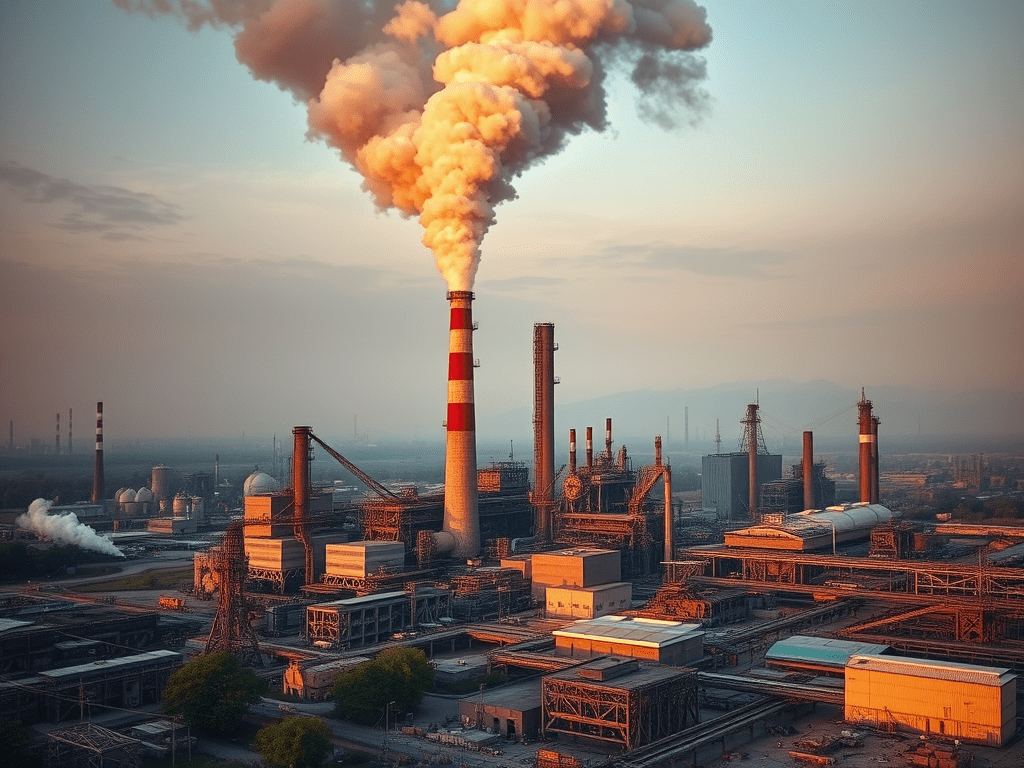
This article is a compilation of excerpts from various sources and to calm the curious mind of a Boy born and brought up in this Industrial town (My Home town !). How Decision Makers arrived to the name – Bokaro ?
Why Bokaro ?
There were several locations which appeared as obvious choices with abundance of mineral resources. However, factors other than natural endowment were involved in the decision – after all, rich deposits could be found in various locations throughout the country. As several scholars have noted, certain non-economic imperatives related to the project of post-colonial nation building played a significant role. For example, the state’s commitment to balanced nation development could be showcased through its act of “bringing progress” (in the form of steel plants) to “backward areas.” In other instances, the final decisions about the location were shaped by political compromises of the federal bargaining process. These surfaced with particular intensity during the planning process for the Bokaro Steel project in the late 1950s, as political elites in several other states of India made the case for building a steel plant in Bokaro rather than in Bihar. If Bokaro was chosen in the end, its selection had more to do with “Politics of Steel” and the political skills of the Chief Minister of Bihar at that time than the quality of iron ore in Salem, Hospet , or Visakhapatnam (the other proposed locations ). For an extended discussion see Town and Country Planning Organisation, Town and Country Planning in India, 67; Desai, Bokaro Steel Plant, 8-9; and Sivaramakrishnan, This observation accompanied an account why the process of building Bokaro was easier than building of other steel towns, where construction workers had to contend with a less “undulating” environment. In Contrast, intensively cultivated flat and therefore easier to build upon.
( Click Here for Source as on 19 April 2020 )
“Bokaro Steel Plant” – Was this easy for India to narrow down to USSR ?
The achievement of Self-Sufficiency is a long process, and even as Nehru worked towards that goal, the nation was drawn into closer involvement with the Soviet Union. In September 1964, the Soviets confirmed their readiness to assist in the construction of the huge Bokaro Steel Plant … (Source:” Indo-Soviet relations , CIA Document Services Branch File Copy” available online. Date of Access 19-april-2020 )
United States officials continued to worry that Soviets, Spending much less on a few highly visible public sector industrial projects, were winning more friends than the United States. Less visible US assistance was scattered around the country, often in physical and human infrastructure activities like education, agriculture, health and transportation. To generate more publicity, Galbraith spent two weeks in October 1962, travelling by special train, accompanied by a platoon of American and Indian newsmen, to US AID projects in the four corners of India. The trip began in Kanpur, the north Indian Industrial center, where AID was funding an Indian Institute of Technology an effort to recreate an MIT style engineering institute, staffed with American professors. The train then chugged eastward across the Ganges pain to Bokaro in Bihar (Now Jharkhand), where Galbraith hoped AID would finance the million ton public sector steel mill, and on to the coal rich Damodar Valley to inspect a US-Funded coal washery.
Galbraith continued to push hard in Washington to win approval for two major “impact ” projects – the public sector steel mill at Bokaro and the nuclear power station at Tarapur near Bombay (Now Mumbai). Galbraith strongly supported Bokaro as a symbol of US commitment to Indian industrialization.
US aid for Bokaro, the Kennedy administration was unable to overcome opposition to the project on Capitol Hill. (Click Here for Source )
Let us understand why ? – In congress, where India remained unpopular with many members because of its foreign policy, conservative Democrats and Republicans were unenthused about spending $900 million for Bokaro, until then the largest aid project proposed. Adding to the administration’s difficulties was the opposition of General Lucius Clay, whom President Kennedy asked to undertake a detailed review of economic assistance. Clay could not see why the US taxpayers should finance a steel mill in Indian Public Sector. Galbraith stuck to his Guns, However, gaining President Kennedy’s public backing for Bokaro. “The congress may have other views,” Kennedy stated in 8 May 1963 press conference, “but I think it would be a great mistake not to build it. India needs the steel.” With President’s support Bokaro stayed alive- atleast for the time being. (Click Here for Source )
The Economic Weekly on 20th January 1962 published an article and under the heading “Bokaro Steel Plant” writes – The point in recalling this agreement of seven years ago is to contrast the Soviet altitude with that of the Americans over Bokaro — intended to be another showpiece. Notwithstanding Professor Galbrailh’s personal interest in this project, negotiations are making halting progress because Americans want, it is reported, complete control over design, engineering, construction and even operation of the plant for the first five years unhampered by sharing of responsibility with or participation of Indians. This will amount to making Bokaro an American enclave in Indian territory. It is amazing but true that New Delhi has not yet declared what its wishes are in this matter, thus allowing Americans to take this extreme line. (Please refer “BokaroSteel Plant ” by The Economic Weekly on 20 January 1962 )
On 2nd May 1964 New York Times published
“… The Soviet move is an important one in the triangular relationship of this nonaligned country with Communist and capitalist blocs. Bokaro, in eastern India, will eventually be the biggest steel plant in India…”
Similarly on 4th May 1964 New Youk Times in an article clearly states
“The announcement that the Soviet Union has offered India financial aid for the big steel mill it wants to build at Bokaro represents a major defeat for the United States in a crucial area of the cold war. The steel mill is essential to India’s industrial development, and until last fall India had every reason to expect that it could get the necessary construction loans and technical assistance from the United States…”
The Bokaro Steel Plant: A Study of Soviet Economic Assistance
[By Padma Desai. Amsterdam and New York: North-Holland Publishing Company and American Elsevier Publishing Company, 1972. xviii, 108 pp. $9.75, paper. ]
Padma Desai courageously ventures into a field where almost all economists now fear to tread: political economy and the proper technological choice as a key aspect of economic development. Her daring foray is successful. As in the case of the Aswan Dam, the United States first considered construction of the enormous Bokaro iron and steel plant, opted out, and the Russians stepped in. “The Soviet Union has traditionally managed to secure generous returns on its aid program in India by ‘doing what the West would not do,’ especially in the areas of heavy industry and oil. However, in the case of the Bokaro Steel plant, it landed itself into a tricky and novel situation. By the time aid negotiations for the steel plant were initiated, India had already reached a stage of technological maturity so that local expertise in designing and constructing steel plants was available. Indeed, the prestigious firm of M. N. Dastur and Company was actively associated with the early planning of the project and had the competence to assess critically the proposed Soviet designs; it was, however, muscled out by the Soviet negotiators from the final aidcontract to the chagrin of an articulate and aroused public opinion cutting across most political parties” (p. xi). The author believes that the Russians should have permitted the Indian firm, Dastur and Company, to play an important role in planning, equipping, and constructing the plant, instead of insisting on a turnkey project with minimal Indian participation. On the other hand, Dastur, although knowledgeable, had never undertaken a large steel project, and the record of Indian participation in the construction and operation of public sector steel plants was disastrous, as William Johnson showed in The Steel Industry of India (Cambridge, Mass., 1966). Furthermore, the completely Russian, turnkey Bhilai steel plant, which the Soviets had built for the Indians, was generally considered to be very successful. Under such circumstances one cannot blame the Russians for avoiding the risks of partnership.
Conclusion
This was not it then came awesome planners and efficient professionals who envisioned and worked relentlessly on “Social Responsibility” as a result Bokaro and other industrial towns should be seen as an example of matured “Corporate Social Responsibility” (when CSR was not a hot cake) taken up by industry. This should be seen as a role model by present day organisations practicing “Corporate Social Responsibility” as forced compliance. (Suggested Reading : New Towns in India – A report on a Study of selected New Towns in the Eastern Region by K.C. Shivaramakrishnan)
Disclaimer:
Please note that the views and opinions expressed in this blog post are solely those of the author and do not represent the views of any organization or affiliate. The content provided is intended to foster thoughtful discussion and does not aim to offend or undermine any particular group or individual. Readers are welcome to hold differing opinions and are encouraged to share their perspectives in a constructive and respectful manner.






 Ajay Prasad
Leave a comment